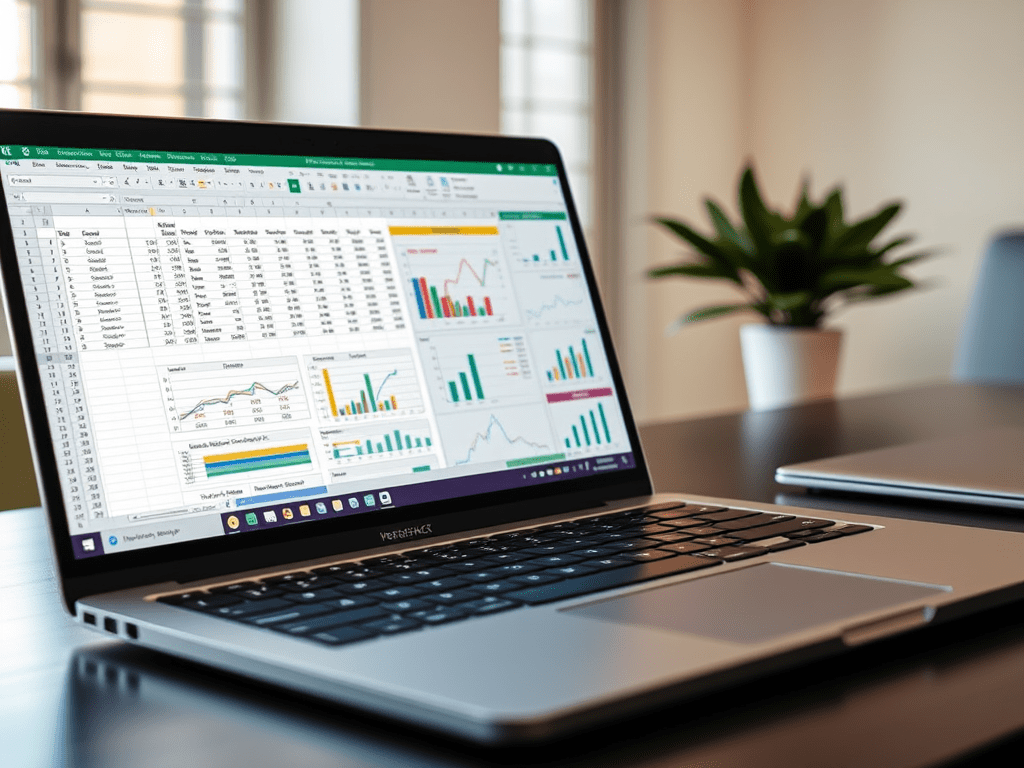
If you’re like most finance professionals, you’ve probably spent more nights than you’d care to admit wrestling with an Excel file that just won’t give you the answers fast enough. Forecasting and scenario modeling are at the heart of strategic decision-making, but they often feel more like a manual labor marathon than a strategic superpower. The good news? Excel has more tricks up its sleeve than most people realize. These “hacks” won’t just save you time—they’ll change how you approach your work.
In this article, I’ll walk you through 10 essential Excel hacks that can transform your forecasting and scenario modeling processes into a lean, mean, decision-driving machine.
1. Use Excel Tables for Dynamic Ranges
Instead of using static cell ranges in your formulas (like A2:A1000), convert your data into a Table using Ctrl + T. Tables auto-expand when you add data, which means your forecasts automatically stay updated without you having to adjust formulas.
Why it matters: There is less risk of broken formulas or forgetting to update ranges as new months roll in.
2. Leverage Named Ranges for Clarity
Have you ever looked at a formula like =SUM(F2:F53) and wondered what the heck it’s summing? Named ranges allow you to replace that with =SUM(Sales_Forecast), improving readability and reducing errors—especially in complex scenarios.
Try this: Go to Formulas > Name Manager and define names for frequently used ranges.
3. Apply Data Validation to Build Assumptions Models
Data Validation (under the “Data” tab) enables you to create drop-downs for key drivers, such as growth rates, discount percentages, or inflation rates. Combine this with a clean assumptions tab, and suddenly, you’re running what-if analyses with a few clicks.
Pair it with CHOOSE() or INDEX() to create multi-scenario models that shift with one drop-down.
4. Master the OFFSET Function for Dynamic Forecasting
The OFFSET function allows you to create formulas that adjust automatically based on input. For example, dynamically referencing the last 12 months for a rolling forecast.
Excel
CopyEdit
=AVERAGE(OFFSET(B2,COUNT(B2:B100)-12,0,12,1))
Pro tip: Combine with MATCH() or COUNTA() for real flexibility.
5. Use Scenario Manager (Built-in Tool)
Scenario Manager (under Data > What-If Analysis) lets you store multiple versions of inputs (e.g., best case, base case, worst case) and switch between them without rewriting anything. It’s Excel’s underused forecasting engine.
Ideal for management presentations where multiple outcomes must be shown clearly.
6. Speed Up with Excel’s Forecast Sheet
Excel’s built-in Forecast Sheet (under Data > Forecast Sheet) can automatically generate forecasts using historical time-series data. It includes confidence intervals and the detection of seasonality. It’s not perfect, but for quick directional views—it’s gold.
Great for short-term sales, expense, or inventory forecasts.
7. Use Slicers and PivotTables for Live Scenario Analysis
PivotTables make it easy to summarize and re-categorize data instantly. Add Slicers and Timelines to let users change periods or categories live.
Perfect for operational forecasting, where variables such as region, product, or customer type are relevant.
8. Incorporate Excel’s Solver for Optimization
Forecasting isn’t just about looking ahead—it’s about finding the best path forward. Solver lets you find the input mix that achieves your target (like hitting an EBITDA goal or staying within a budget).
Found under Data > Solver (you may need to enable it first in Add-ins).
9. Create Dynamic Charts with Form Controls
Want to impress your stakeholders? Add scroll bars or drop-downs using Form Controls (located in the Developer tab) and link them to your forecast model. This way, users can interact with your assumptions visually.
Combine with charts to create dynamic dashboards that update in real-time with input changes.
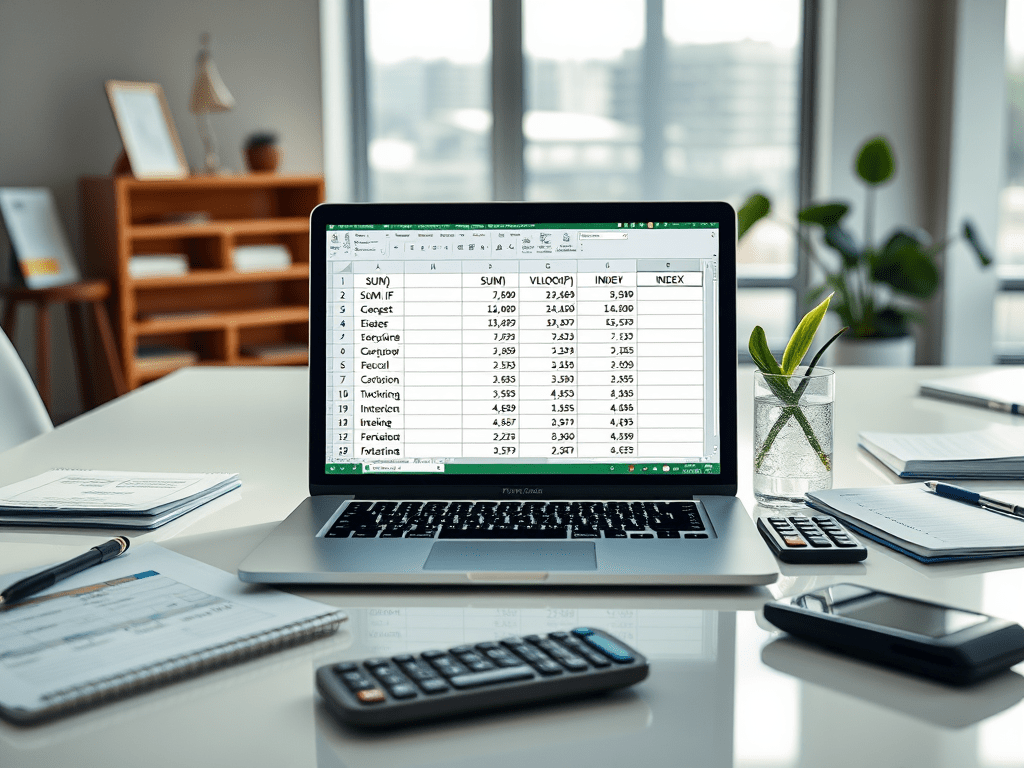
10. Use XLOOKUP for Clean Scenario Referencing
XLOOKUP replaces VLOOKUP and INDEX-MATCH with a cleaner, more powerful way to retrieve data. Use it to pull in assumptions based on scenario labels or periods.
Excel
CopyEdit
=XLOOKUP(“Base Case”,A2:A10,B2:B10,”Not found”)
Bonus: XLOOKUP can search both vertically and horizontally, reducing formula clutter.
Humanizing the Numbers
You don’t have to be an Excel wizard to forecast like a pro. Even finance leaders like Dan Crumb, CFO of the Kansas City Chiefs, once admitted in an Inc. interview that mastering the basics of Excel modeling gave him a huge edge early in his career. Similarly, Jenny Lyons, an FP&A director at a fast-growing SaaS firm, revealed on her LinkedIn blog that dynamic ranges and named formulas saved her team over 20 hours per month.
And let’s not forget Chandoo, one of the most renowned Excel bloggers, who has built an entire business teaching finance professionals how to create smarter, faster spreadsheets. His mantra: “Excel is not just a tool; it’s a thinking assistant.”
Wrapping It Up
In a world where decisions need to be made in days—not weeks—Excel can be your greatest ally… if you know how to use it well. These hacks are not just time savers—they’re enablers. They free up your time so you can do what actually matters: thinking critically, building narratives, and guiding strategy. Try adopting two or three of these hacks into your routine this week. Your spreadsheets—and your sanity—will thank you.
FG






 Lean Finance and Operations
Leave a comment