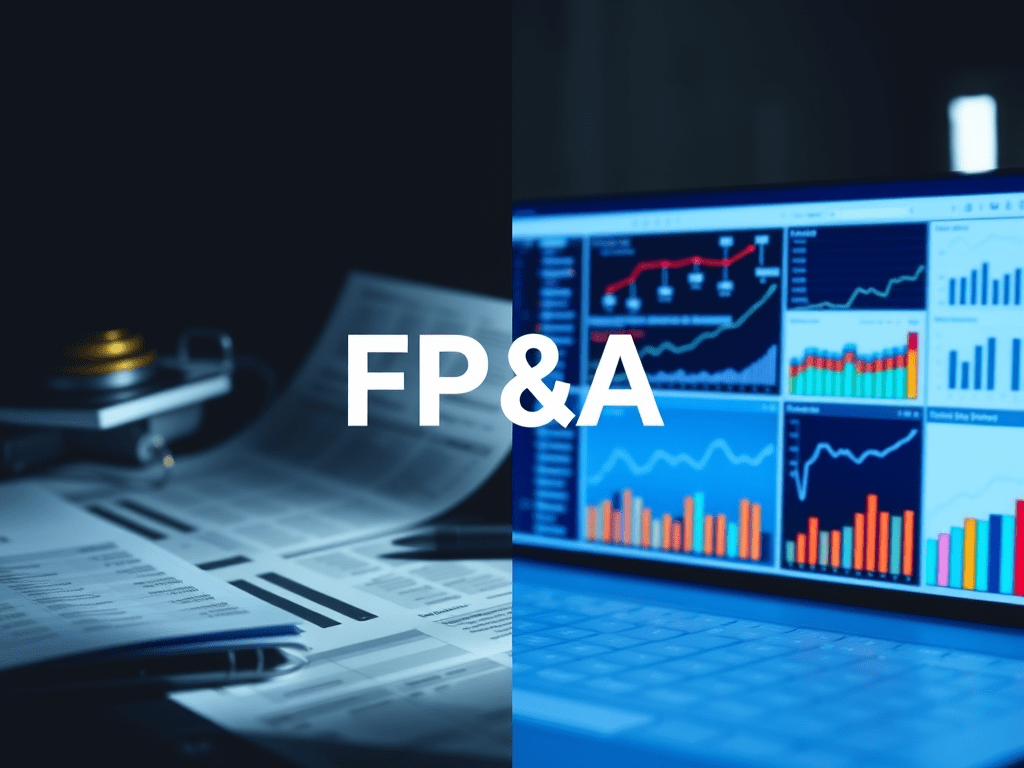
In a previous post, I mentioned that Financial Planning & Analysis (FP&A) was mainly seen as a reporting and budgeting department. Its core responsibilities included preparing monthly management reports, explaining variances after the fact, and supporting the annual budget cycle. While this work was essential, it positioned FP&A as a backward-looking function, focused more on explaining what happened than influencing what should happen next.
Today, that paradigm is changing quickly. The evolution of FP&A reflects broader shifts in business complexity, data availability, and executive expectations. Modern FP&A teams are no longer just scorekeepers. They are becoming real-time decision partners, embedded in the business and actively shaping strategy, resource allocation, and growth decisions.
The Traditional FP&A Model: Accurate but Slow
Historically, FP&A operated in a structured environment. Data was fragmented across ERP systems, spreadsheets, and departmental reports. Monthly close cycles could take weeks, leaving decision-makers reviewing information that was already outdated. Forecasts were typically refreshed quarterly or, at best, monthly, limiting their effectiveness in fast-moving markets.
In this model, success was defined by accuracy and control. FP&A professionals were expected to reconcile numbers, produce clean reports, and defend variances. While these skills remain foundational, the traditional model struggled to support dynamic decision-making. By the time insights reached leadership, the window to act had closed.
The Forces Driving Change
Several forces have accelerated the transformation of FP&A.
First, business volatility has increased. Global supply chains, inflation, geopolitical risks, and rapid technological change have made static annual budgets obsolete. Leadership teams now require frequent scenario analysis and forward-looking insights to navigate uncertainty.
Second, data availability has exploded. Cloud-based ERPs, business intelligence tools, and operational systems generate vast amounts of real-time data. The challenge is no longer access to information but the ability to interpret and translate it into actionable insights.
Third, expectations of finance have shifted. CEOs and business leaders increasingly expect FP&A to act as a strategic advisor, not just a financial historian. They want finance partners who understand the business model, customer drivers, and operational constraints, and who can quantify trade-offs quickly.
From Reporting to Insight Generation
The first stage in FP&A’s evolution was moving beyond pure reporting toward insight generation. This involved automating recurring reports, standardizing data definitions, and reducing manual spreadsheet work. As transactional tasks became more efficient, FP&A had more time to analyze trends, identify drivers, and ask better questions.
Driver-based planning became a critical development at this stage. Instead of forecasting by line item, FP&A teams began modeling the underlying business drivers, such as volume, pricing, headcount, and capacity utilization. This shift allowed forecasts to be more responsive and aligned with operational realities.
The Rise of Continuous Forecasting and Scenario Planning
The next evolution was the move from static budgets to continuous forecasting. Rolling forecasts, updated monthly or weekly, replaced once-a-year planning exercises. This allowed organizations to respond faster to changes in demand, cost structures, and market conditions.
Scenario planning also became a core FP&A capability. Rather than producing a single “most likely” forecast, FP&A teams now evaluate multiple scenarios: best case, worst case, and base case, along with probability-weighted outcomes. This approach supports more resilient decision-making and helps leadership understand risks before they materialize.
FP&A as Real-Time Decision Support
Today, leading organizations are pushing FP&A even further, toward real-time decision support. In this model, FP&A is embedded directly into operational and strategic discussions. Finance partners sit alongside sales, operations, and product leaders, providing financial context in near real time.
Advanced analytics and AI play an important role here. Predictive models can identify patterns, flag anomalies, and forecast outcomes faster than traditional methods. Dashboards provide live visibility into key performance indicators, enabling leaders to act immediately instead of waiting for month-end reports.
Crucially, technology alone is not enough. The real differentiator is mindset. Modern FP&A professionals focus less on “closing the books” and more on “opening conversations.” They frame insights in business language, highlight implications, and recommend actions, not just numbers.
The Skills Behind the Evolution
As FP&A evolves, so do the required skills. Technical accounting knowledge remains important, but it is no longer sufficient. Today’s FP&A leaders must combine financial expertise with business acumen, data literacy, and strong communication skills. comfortable working with imperfect data, making assumptions explicit, and providing directional guidance under uncertainty. Perhaps most importantly, they must build trust with stakeholders, positioning finance as a partner in value creation rather than a gatekeeper.
Looking Ahead
The evolution of FP&A from reporting to real-time decision support is ongoing. Organizations at different stages of maturity will progress at different speeds. However, the direction is clear: FP&A’s value lies not in producing more reports, but in enabling better, faster decisions.
In a world where change is constant, FP&A’s ultimate role is to help leaders see around corners, connecting financial outcomes to operational actions and strategic choices. Those finance teams that embrace this evolution will move from being observers of performance to architects of the future.
References
- Hope, J., & Fraser, R. (2003). Beyond Budgeting: How Managers Can Break Free from the Annual Performance Trap. Harvard Business School Press.
- Zeller, T. L., & Metzger, L. M. (2013). Good Business: Exercising Effective and Ethical Leadership. Routledge.
- Kaplan, R. S., & Norton, D. P. (2001). Strategy-Focused Organization. Harvard Business School Press.






 Lean Finance and Operations
Leave a comment